

Jeremy Carrad led a varied life. Born in 1932, he grew up first in Sutton Coldfield and then in London. After enjoying his national service, he stayed on in the army for another 10 years, setting up a forces' radio network and making programmes for the troops. From 1962 to 1976 he was anchor of the BBC West news programme, Points West, before deciding he'd had enough of that and quitting to run communications courses for industry. Latterly he was a playwright and novelist.
Books by Jeremy Carrad

All Rights Available
‘EASY SPEAKING’ is written for all those millions of us, in whatever corner of the world we inhabit, who dislike – even dread – the thought of standing on our two hind legs and talking to an audience. It is directed to every age group from the teenager seeking a university place or attending a job interview, through the masses of amateur officials of societies and groups, to business people enduring the agonies of presenting to others.
The book is written in a light, friendly, humorous style. It has a touch of the ‘For Dummies’ computer series of books about it and leans towards the Bill Bryson self-deprecating style. The writing is designed to draw in and involve the reader, providing a number of simple, fun exercises as the mystery of being an effective communicator unfolds and is simply resolved.
The opening page of the book starkly reminds us of three indisputable facts that we, as communicators, have to face:
· OUR CHARACTER AND ABILITY ARE INITIALLY JUDGED BY OTHERS ACCORDING TO OUR ABILITY TO COMMUNICATE EFFECTIVELY.
· FEW TELL US TO OUR FACE HOW EFFECTIVE WE ARE – ALTHOUGH THEY DELIGHT IN TELLING EACH OTHER BEHIND OUR BACKS!
· FEW OF US ACTUALLY KNOW WHAT OUR STRENGTHS AND WEAKNESSES AS EFFEECTIVE COMMUNICATORS ARE… WE CAN ONLY GUESS.
From here, with the help of a mythical family, the Jones’s, the chapters lead us through an examination of our AUDIENCES and OURSELVES. Here we explore our strengths and weaknesses as communicators and how we appear and sound to others.
And through its style and teaching it is unique: there’s never been anything like it before. It’s a ‘must’ for pretty well everyone.
Other Books by Jeremy Carrad


Born in 1917 and educated at Hounslow College, Ralph joined the editorial staff of Sporting Life in 1934, but later went into banking. Meanwhile, he had begun writing, and several of his sketches and scenes were produced in West End Revue.
Ralph joined the RAF in 1940 as a wireless operator/air-gunner and progressed his military career until 1961 when he retired voluntarily from the RAF to write full time. He was a frequent contributor of feature stories to the Sunday Express.

Petra du Preez is a popular astrologer who has contributed over the years to various South African magazines including Fairlady, You and Huisgenoot. Outside South Africa her horoscopes currently appear in Viva (UK), Fiji Times, Manawata Standard and The Aucklander (New Zealand) and Ahlan (Dubai).
Petra lives in Cape Town where she is a consultant for a substantial clientele who value her combination of psychological insight and astrological skill.
Petra has published a number of books and has recently released her fifth book, Astrodisiacs – sexy star signs, an entertaining and insightful guide to how the star signs relate, illustrated with original work by the much admired artist Liekie Fouché.

David J. Bodycombe is an English puzzle author and games consultant. He is based in London, and his work is read by over 2 million people a day in the UK, and is syndicated to over 300 newspapers internationally. The British public know him best as the author of popular puzzle columns in publications such as the Daily Mail, Daily Express, Metro and BBC Focus magazine.
He also consults on many television game shows, including The Crystal Maze, The Krypton Factor, The Mole and Treasure Hunt. He was the question editor for the first 8 series of BBC Four's lateral thinking quiz Only Connect. On BBC Radio 4 he appeared on the quiz Puzzle Panel and devised the cryptic clues for X Marks the Spot. He has written and edited over forty books, including How to Devise a Game Show and The Riddles of the Sphinx – a history of modern puzzles.
In 2005 he became a leading author of sudoku puzzles, and he was the first person to have sudokus published in several major territories, including India and Scandinavia. As well as the classic 9x9 puzzle, he pioneered a number of alternative designs which have proved popular with readers all over the world. His games, puzzles and questions also appear in many magazines, and on websites, advertising campaigns, board games and interactive television.
He edits UKGameshows.com, a wiki-based web site cataloguing UK television and radio game shows.
Jeremy Carrad led a varied life. Born in 1932, he grew up first in Sutton Coldfield and then in London. After enjoying his national service, he stayed on in the army for another 10 years, setting up a forces' radio network and making programmes for the troops. From 1962 to 1976 he was anchor of the BBC West news programme, Points West, before deciding he'd had enough of that and quitting to run communications courses for industry. Latterly he was a playwright and novelist.

W.H. Canaway was born in 1925 in Altrincham, Cheshire. He was educated at Altrincham Grammar School and the University College of North Wales, Bangor, where he was awarded with a B.A. and M.A. degrees. He served in the 8th Army intelligence in North Africa and Italy during the latter part of the Second World War, before coming home to lecture at Stafford Technical College. After ten years of this, he committed himself to full-time writing. He wrote fifteen novels, including Sammy Going South, a book that was translated into a dozen languages and was made the Royal Command Film Performance of 1963. He was also a keen angler and wrote two highly regarded fishing books, as well as many articles for The Fishing Gazette. However, it is probably as a screenwriter that he is best remembered - The Ipcress File (starring a young Michael Caine in 1965) being amongst his credits, as well as TV series such as Brendon Chase and Dan, Badger and all the Coal. He died on 22nd May 1988, whilst still working on a film version of an earlier work, A Declaration of Independence.

Roger Courtenay is descended from a long line of Cornish fishermen and miners, so was naturally drawn to a career as an economist in the City of London. He divides his time between his home in London, and Cornwall, where he obsesses about the Cornish language and pretends to surf.
He has a first in economics from Cambridge University, a PhD in asset pricing theory, and is both a Bard of the Cornish Gorsedh and member of the Cornish Language Board.

Frank Dickens was born in Hornsey, London 1932.
Dickens left school at sixteen and began working for his father, a painter-decorator. A self-taught artist, he began working as a cartoonist in 1959 and has since won eight 'Cartoonist of the Year' awards for his Bristow series. In 1971 he made an introduction into stage work and in 1999 adapted Bristow into a six-part series for BBC Radio 4. Dickens has also published twelve children's books and two thrillers.

Born in London, Charles Hall lives in rural Essex with his wife Jacqueline. It was Jacqueline whose deep involvement set him on the ‘write track’ when it came to writing ‘Megaton Mornings’: a book about his experiences with twenty-five nuclear tests whilst serving in the RAF.
Now semi-retired from business life, and apart from playing boogie-woogie piano - one of his numbers featured in the soundtrack of BBC TV’s ‘Love Soup’ - Charles has found more time to write the kind of stories he likes to read: fast moving action thrillers.

David Kerr Cameron was born in Aberdeenshire in 1928.
After National Service in the RAF he joined Kirriemuir Herald, a Scottish weekly, 1951. He worked at various newspapers and magazines, including the Farming Express, where he was managing editor.
In 1966 he joined the Daily Telegraph, where he was, in succession, a Features Sub-Editor, Chief Features Sub-Editor, Weekend section/Books section production Sub-Editor of both Sunday and daily pages, and finally Sub-Editor on Arts desk. He retired from the Daily Telegraph in 1993.
He never forgot the rigours of farming life in Aberdeenshire, which he wrote about with un-sentimental vividness in his books.
The Ballad and the Plough (1978), Willie Gavin, Crofter Man (1980), and The Cornkister Days (1984), all of which won Scottish Arts Council Awards, gave the social history of the North-East a readability that drew comparisons with the work of the late John Prebble.
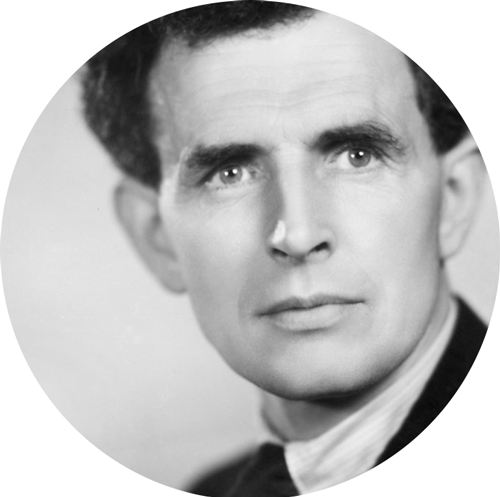
Patrick MacGill was born in Glenties, County Donegal, Ireland in 1889. He was a journalist, novelist & poet, known as ‘The Navvy Poet.
During WW1 he served with the London Irish Rifles, and was wounded at the Battle of Loos in 1915.
He moved to Florida, where he passed away on 22 November 1963.
His works include: Children of the Dead End, The Rat-Pit, The Amateur Army, The Red Horizon, The Great Push, The Brown Brethren, The Dough-Boys, The Diggers: The Australians in France, foreword by W. M. Hughes, Australian PM, Glenmornan, Maureen, Fear!, Lanty Hanlon: A Comedy of Irish Life, Moleskin Joe , The Carpenter of Orra, Sid Puddiefoot, Una Cassidy, Tulliver’s Mill, The Glen of Carr, The House at the World's End, Helen Spenser