

W.H. Canaway was born in 1925 in Altrincham, Cheshire. He was educated at Altrincham Grammar School and the University College of North Wales, Bangor, where he was awarded with B.A. and M.A. degrees.
He served in the 8th Army intelligence in North Africa and Italy during the latter part of the Second World War, before coming home to lecture at Stafford Technical College. After ten years of this, he committed himself to full-time writing.
Canaway wrote fifteen novels, including Sammy Going South, a book that was translated into a dozen languages and was made the Royal Command Film Performance of 1963. He was also a keen angler and wrote two highly regarded fishing books, as well as many articles for The Fishing Gazette. However, it is probably as a screenwriter that he is best remembered - The Ipcress File (starring a young Michael Caine in 1965) being amongst his credits, as well as TV series such as Brendon Chase and Dan, Badger and all the Coal. He died on 22nd May 1988, whilst still working on a film version of an earlier work, A Declaration of Independence.

Its inscrutable smile promised many things to many men - but for 700 years none had dared to take the A plane crash, a near fatal disease - and everything that Bernard Miller cares for in his life is suddenly destroyed. £5 million in gold would solve a lot of problems. Except when it had to be lifted from underneath the noses of the Thai police, a powerful criminal mastermind, and a nation that reveres the Buddha as the symbol of its spiritual salvation. And when even his closest friends become his enemies...

There is a 'grand guignol' quality about Harry Doing Good which may suprise and delight.

Gwenno, precocious, articulate, tenacious of spirit and fierce of outlook - though never lacking humour - wages her campaign against the establishment. Branded as the Anglesey men’s whore, tormented by the local population, she retains enough fighting spirit to score an appropriate revenge in circumstances of breath catching suspense.

W. H. Canaway wrote about the futility of war in his last novel, THE GREY SEAS OF JUTLAND. This time he is concerned with the farce of war.

We first meet Geraint Edwards in his native Snowdonia, when he is playing truant, and we observe him for six to seven years while he goes to grammar school, learns to play the violin, fishes for trout, climbs mountains, falls in love, and is initiated, casually on a mountain side, into the mystery of sex.
The unique quality of this book is the sense of wonder instilled from the first page: for Geraint is at the age (soon forgotten by adults) when he discovers that life and people are seldom what they seem. The black bearded schoolmaster he plans to shoot - when he can afford a gun - has a very human side to his character. Betty Mai Shafto is certainly not the ‘fat, toadying custard pie’ that she seems. And the terrifying English-man, Mr Maitland, is a never-ending source of shocks.
Gradually, as mature judgements take the place of the accepted notions of childhood the boy grows up against background of the giant, craggy slate quarries and mountains which brood over the village and take their regular toll of human life.

A dramatic quest for the rare and beautiful oryx in the Arabian desert

The prodigious length of the African continent unrolls before the reader in this novel of Sammy Hartland’s journal south from Port Said in Egypt. He meant to find his last remaining relative in Durban, some five thousand miles away, but realised neither the obstacle of distance nor the perils of passage. He merely sighted the rising sun on his left and headed south. Sammy was a ten year old English boy, orphaned by a bomb dropped on the Egyptian port city during the Suez affair.

This is a novel telling of the story of Tegla, an old Welsh longshoreman, who determines to kill a grey seal which is spoiling his fishing and ruining his nets. He makes this decision at the same time as Edward Drey, foolish, bumbling, slyly lustful, decides to seduce Tegla's pretty young daughter Bronwen whom he sees bathing one day as he - ostensibly bird-watching - scans the coast through his binoculars.
After some comic scenes, Tegla's conflict is resolved in a moving and unexpected climax which combines humour with pathos. This novel shows a deep knowledge of wild life and a sharpe eye for situation and character.

Young farm worker tells how he falls in love with his employer's granddaughter and of the scolding of the neighborhood "crows" when his father causes her to become pregnant.

This novel tells simply and excitingly the story of one of the most splendid and terrible periods of history, when the remote forbears of the English were still largely in Scandinavia or North West Europe

W. H. Caraway was a game fisherman. He doesn’t despise the immaculate calm of the chalk water but he revels in the smash and grab of the mountain or moorland stream.
Such a river is Gwyrfai as it comes rolling off the granite shoulder of Snowdon. You may never have heard of the Gwyrfai, but that is scarcely the point. The Gwyrfai (pronounce it more or less to rhyme with ‘swervy’) is typical of fifty other rivers in north Wales and Scotland. Its problems are the ones that many a holiday trout fisherman faces when he visits a hill district.
The river holds fighting brown trout, but also has a good run of sea trout and salmon. It can be fished wet and it can be fished dry: it can even be spun if you are so inclined. At its mouth you will find everything including giant bass scouring the sands for food.
Mr Caraway, whose first fishing book A creel of Willow was a rare gem, deals with all species and all techniques in a narrative style as lively and well-paced as the stickle at the tail of a sea trout pool. In his appendices he gives every practical detail the visitor may wish to know from choice of flies to licence fees.

A Creel of Willow
A Creel of Willow is set on the little river Withy and encounters the various characters who fish the water: Rogers, the time and motion man who fishes like a machine, the wise and kindly Dee who fishes the dry fly because he likes it, and old Percival, who does so because his father told him to.
This is a book for fishermen; it's also a book for people who can't understand fisherman at all.

Born in 1917 and educated at Hounslow College, Ralph joined the editorial staff of Sporting Life in 1934, but later went into banking. Meanwhile, he had begun writing, and several of his sketches and scenes were produced in West End Revue.
Ralph joined the RAF in 1940 as a wireless operator/air-gunner and progressed his military career until 1961 when he retired voluntarily from the RAF to write full time. He was a frequent contributor of feature stories to the Sunday Express.

Petra du Preez is a popular astrologer who has contributed over the years to various South African magazines including Fairlady, You and Huisgenoot. Outside South Africa her horoscopes currently appear in Viva (UK), Fiji Times, Manawata Standard and The Aucklander (New Zealand) and Ahlan (Dubai).
Petra lives in Cape Town where she is a consultant for a substantial clientele who value her combination of psychological insight and astrological skill.
Petra has published a number of books and has recently released her fifth book, Astrodisiacs – sexy star signs, an entertaining and insightful guide to how the star signs relate, illustrated with original work by the much admired artist Liekie Fouché.

David J. Bodycombe is an English puzzle author and games consultant. He is based in London, and his work is read by over 2 million people a day in the UK, and is syndicated to over 300 newspapers internationally. The British public know him best as the author of popular puzzle columns in publications such as the Daily Mail, Daily Express, Metro and BBC Focus magazine.
He also consults on many television game shows, including The Crystal Maze, The Krypton Factor, The Mole and Treasure Hunt. He was the question editor for the first 8 series of BBC Four's lateral thinking quiz Only Connect. On BBC Radio 4 he appeared on the quiz Puzzle Panel and devised the cryptic clues for X Marks the Spot. He has written and edited over forty books, including How to Devise a Game Show and The Riddles of the Sphinx – a history of modern puzzles.
In 2005 he became a leading author of sudoku puzzles, and he was the first person to have sudokus published in several major territories, including India and Scandinavia. As well as the classic 9x9 puzzle, he pioneered a number of alternative designs which have proved popular with readers all over the world. His games, puzzles and questions also appear in many magazines, and on websites, advertising campaigns, board games and interactive television.
He edits UKGameshows.com, a wiki-based web site cataloguing UK television and radio game shows.

Jeremy Carrad led a varied life. Born in 1932, he grew up first in Sutton Coldfield and then in London. After enjoying his national service, he stayed on in the army for another 10 years, setting up a forces' radio network and making programmes for the troops. From 1962 to 1976 he was anchor of the BBC West news programme, Points West, before deciding he'd had enough of that and quitting to run communications courses for industry. Latterly he was a playwright and novelist.

W.H. Canaway was born in 1925 in Altrincham, Cheshire. He was educated at Altrincham Grammar School and the University College of North Wales, Bangor, where he was awarded with a B.A. and M.A. degrees. He served in the 8th Army intelligence in North Africa and Italy during the latter part of the Second World War, before coming home to lecture at Stafford Technical College. After ten years of this, he committed himself to full-time writing. He wrote fifteen novels, including Sammy Going South, a book that was translated into a dozen languages and was made the Royal Command Film Performance of 1963. He was also a keen angler and wrote two highly regarded fishing books, as well as many articles for The Fishing Gazette. However, it is probably as a screenwriter that he is best remembered - The Ipcress File (starring a young Michael Caine in 1965) being amongst his credits, as well as TV series such as Brendon Chase and Dan, Badger and all the Coal. He died on 22nd May 1988, whilst still working on a film version of an earlier work, A Declaration of Independence.

Roger Courtenay is descended from a long line of Cornish fishermen and miners, so was naturally drawn to a career as an economist in the City of London. He divides his time between his home in London, and Cornwall, where he obsesses about the Cornish language and pretends to surf.
He has a first in economics from Cambridge University, a PhD in asset pricing theory, and is both a Bard of the Cornish Gorsedh and member of the Cornish Language Board.

Frank Dickens was born in Hornsey, London 1932.
Dickens left school at sixteen and began working for his father, a painter-decorator. A self-taught artist, he began working as a cartoonist in 1959 and has since won eight 'Cartoonist of the Year' awards for his Bristow series. In 1971 he made an introduction into stage work and in 1999 adapted Bristow into a six-part series for BBC Radio 4. Dickens has also published twelve children's books and two thrillers.

Born in London, Charles Hall lives in rural Essex with his wife Jacqueline. It was Jacqueline whose deep involvement set him on the ‘write track’ when it came to writing ‘Megaton Mornings’: a book about his experiences with twenty-five nuclear tests whilst serving in the RAF.
Now semi-retired from business life, and apart from playing boogie-woogie piano - one of his numbers featured in the soundtrack of BBC TV’s ‘Love Soup’ - Charles has found more time to write the kind of stories he likes to read: fast moving action thrillers.

David Kerr Cameron was born in Aberdeenshire in 1928.
After National Service in the RAF he joined Kirriemuir Herald, a Scottish weekly, 1951. He worked at various newspapers and magazines, including the Farming Express, where he was managing editor.
In 1966 he joined the Daily Telegraph, where he was, in succession, a Features Sub-Editor, Chief Features Sub-Editor, Weekend section/Books section production Sub-Editor of both Sunday and daily pages, and finally Sub-Editor on Arts desk. He retired from the Daily Telegraph in 1993.
He never forgot the rigours of farming life in Aberdeenshire, which he wrote about with un-sentimental vividness in his books.
The Ballad and the Plough (1978), Willie Gavin, Crofter Man (1980), and The Cornkister Days (1984), all of which won Scottish Arts Council Awards, gave the social history of the North-East a readability that drew comparisons with the work of the late John Prebble.
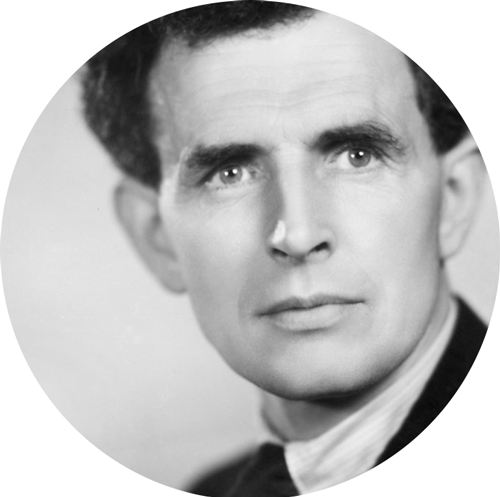
Patrick MacGill was born in Glenties, County Donegal, Ireland in 1889. He was a journalist, novelist & poet, known as ‘The Navvy Poet.
During WW1 he served with the London Irish Rifles, and was wounded at the Battle of Loos in 1915.
He moved to Florida, where he passed away on 22 November 1963.
His works include: Children of the Dead End, The Rat-Pit, The Amateur Army, The Red Horizon, The Great Push, The Brown Brethren, The Dough-Boys, The Diggers: The Australians in France, foreword by W. M. Hughes, Australian PM, Glenmornan, Maureen, Fear!, Lanty Hanlon: A Comedy of Irish Life, Moleskin Joe , The Carpenter of Orra, Sid Puddiefoot, Una Cassidy, Tulliver’s Mill, The Glen of Carr, The House at the World's End, Helen Spenser




In a cleft of rock near Qumran in the Holy Land, Professor John Potts discovers a gold box among some bones.
The box belonged to a Roman centurion Marcus Drusus Scipio. Who was he, and how did he meet his death?